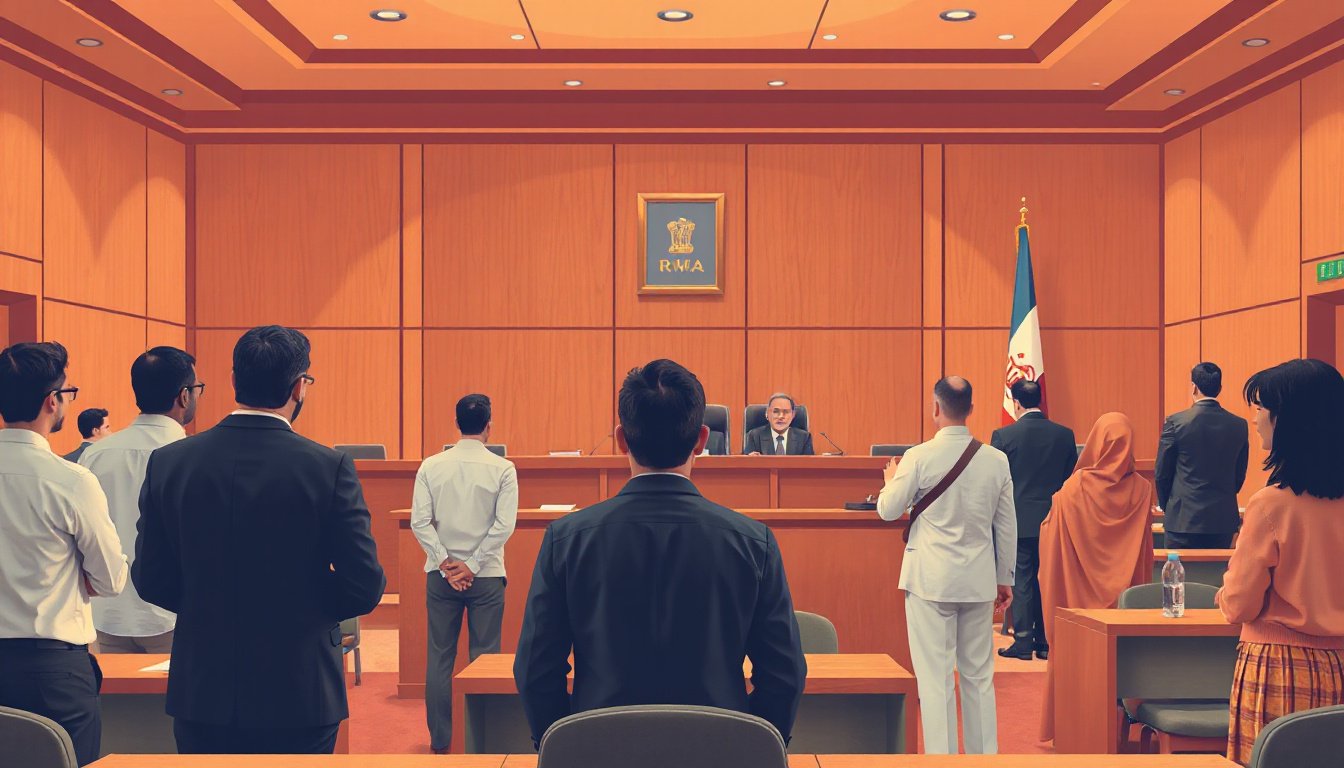
Allahabad High Court Quashes Criminal Case Involving Residents’ Welfare Association, Highlights Misuse of Legal Process
The Allahabad High Court sent back a criminal case. An RWA member was accused by a resident linked with the RSS. The case concerned penalties for wrong parking in a residential area. The court showed that the law was misused and that the police work was weak.
Background of the Case
In the Celebrity Greens society, the RWA set rules for parking. The officials, such as the secretary, president, and caretaker, posted guidelines for vehicle parking. Each resident got one parking slot. A warning came first; repeated errors could lead to a lock on the car and a fine.
An RSS member, who is also a trustee of a nearby trust, broke these rules many times. When the RWA fined him, he filed a first report. He said the RWA members sought money, harassed him, and took fines with no right to collect them.
Legal Proceedings and Claims
The report used parts of the new Nyaya Sanhita (BNS) law. It said that the RWA members met as a group to force money, to scare residents, and to take fines without proper documents. After the police looked into the case, charges were set up with the same law parts.
The accused RWA members said that the RSS member had broken the parking rules again and again, even after warnings. They said that their act was allowed by the society rules. They also said that no act of threat, force, or illegal request took place.
Court’s Findings
The judge looked at the report, the evidence, and the charge sheet. The key findings were:
• The evidence did not show that the RWA members caused fear, threatened, or tricked anyone to get property.
• There was no proof of any insulting act that could disturb the public peace.
• The police work was shallow. The officers did not check society records, bye-laws, or speak with other residents.
• The charge sheet was made too fast and based mainly on the informant’s words.
• The investigation appeared to favor the RSS member by his own weight, which hurt fair judgment.
• There was no trace of money being taken or any threat issued.
The court mentioned the earlier case, Sanjeev v. State of U.P., to show that the police should complete a fair probe before serious charges are pressed.
Court’s Decision and Orders
Justice Pankaj Bhatia said that the report, the charge sheet, and the summons were an abuse of the legal process. He saw that a displeased resident had driven these actions rather than real criminal behavior. He set aside all proceedings against the RWA members.
The judge also ordered the case details to be added to the Investigating Officer’s Annual Report. The case details must go to the Director General of Police for a review. This order reflects the court’s worry about weak police work and bias in the investigation.
Broader Effects
The case shows the problems that RWAs can face when they enforce local rules. Even small actions like parking fines can lead to legal cases and criminal charges.
The judgment reminds us that courts must inspect police work to avoid the misuse of law in settling personal scores, especially when strong groups or figures are involved.
In summary, the Allahabad High Court set aside a criminal complaint against RWA members who had enforced community rules. The case shows clear signs of procedural unfairness, poor investigation, and the use of law for personal disputes.
—
📝 About This Article
This article was generated by Hivebox AI in collaboration with nGRND.
—
⚠️ Disclaimer
This content is for informational purposes only and does not constitute financial or investment advice.
Please consult with a qualified financial advisor before making any decisions related to investments, markets, or assets.
—
Note on Accuracy & Liability
While we strive to provide accurate and up-to-date information, neither Hivebox AI nor nGRND guarantees completeness, reliability, or suitability.
Use this content at your own risk. Neither party assumes liability for any losses you may incur.
—
Thank you for reading.