
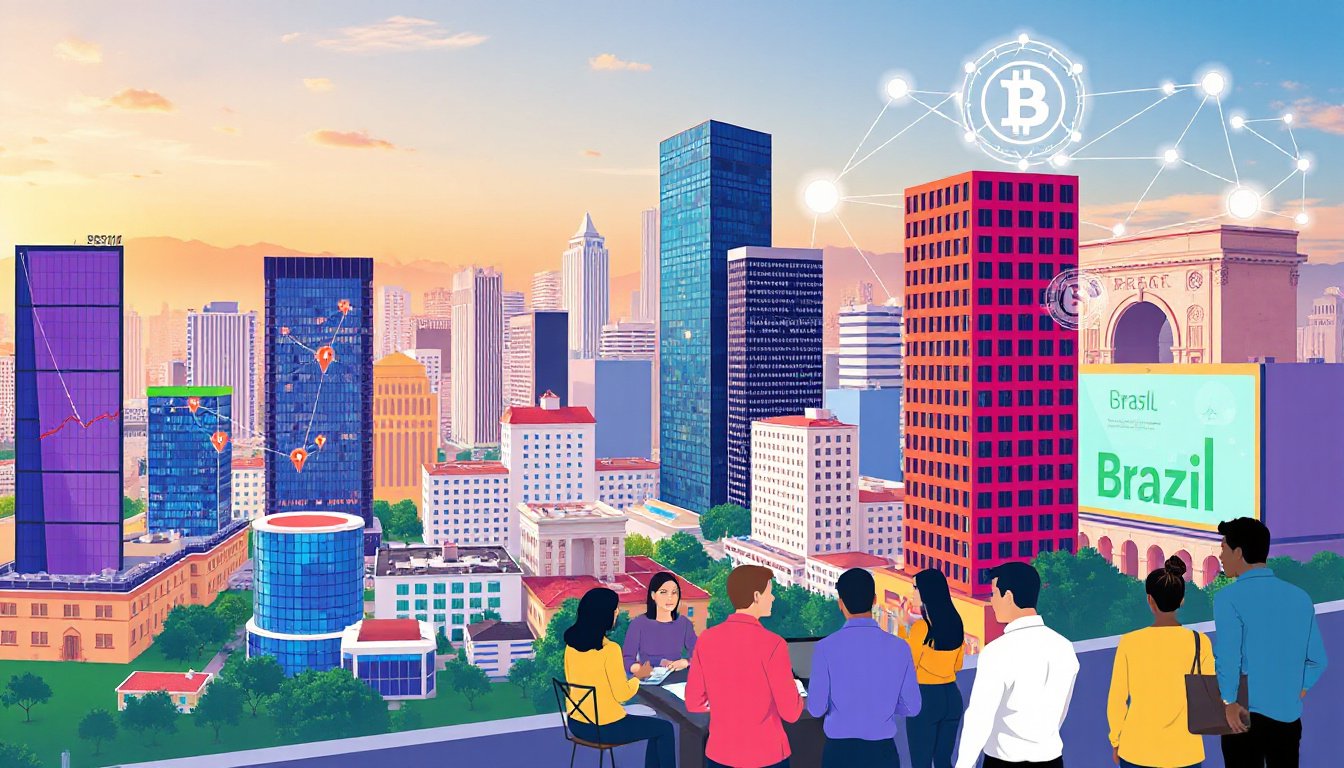
How Brazil Emerged as the Global Lead for Tokenizing Real Assets
In 2026, tokenizing real assets is no longer an idea for the future; it is a working part of finance. Most talk about blockchain still rests on crypto tokens, but new work grows in trade finance, credit markets, and treasury tasks. Brazil now sits at the center where real assets meet blockchain technology.
A Milestone in Institutional Adoption
Liqi Digital Assets and the XDC Network passed the US$100 million mark. This sum does not only show company wins; it ends a test phase and begins large-scale use by institutions. Many companies in several countries have faced strict rules and slow markets with blockchain. In Brazil, the Central Bank and the Securities and Exchange Commission work side by side. Their joint effort creates rules that set blockchain as a key tool for modern finance. The Central Bank’s Drex project focuses on the Digital Real and supports banks like Banco Itaú, Banco ABC, and Banco BV. These banks now use blockchain in daily finance instead of stopping at small tests.
Why Brazil Stands Out
Brazil wins through strong ties between policy makers and businesses. In other places, heavy rules hold back tech use. In Brazil, rules support blockchain for daily business. Big banks and credit experts such as Milenio Capital act with care. They use tokenization to cut costs, speed up settlements, and remove manual errors in credit work. Passing the US$100 million mark shows that blockchain assets no longer remain a side idea. The tokenized assets include items from Corporate Credit Notes to complex finance tools. This growth shows how legal rules, clear records, and active markets work together.
Daniel Coquieri, CEO of Liqi Digital Assets, said, “This step sets a base for growth. We aim to reach US$500 million by the end of 2026. This change shows that banks see tokenization as a useful tool for credit and debt work that is separate from volatile crypto trading.”
Choosing the Right Blockchain Infrastructure
As tokenizing real assets grows, institutions now think not only about the assets to use but also the best place to settle them on a blockchain. In early stages, many chose Ethereum for its strong community and access to funds. Its network often gets busy and its fees jump in low-value trades. This problem makes the XDC Network a better pick for everyday tokenization in Brazil. The XDC Network was built for the needs of large companies. It meets ISO 20022 messaging standards that match systems like SWIFT. It also gives fast and final transaction settlements and sets low, fixed fees that keep costs down.
Diego Consimo, head for LATAM at XDC Network, said, “Our rising volumes with Liqi show that XDC Network can give a safe, steady, and clear blockchain setup for large asset deals in Brazil and Latin America.”
Emerging Markets Leading the Charge
Brazil’s case is part of a world trend where emerging markets move faster in blockchain use. Much like mobile payments moved beyond credit cards in some regions, tokenizing real assets skips slow, split capital markets. This change opens a way for smaller investors to join in large investment chances and helps local companies tap global funds on-chain without steep local banking costs. As Liqi and XDC move toward US$500 million, they build a clear link between Brazilian credit work and funds worldwide. Their plan may serve as a model for financial change in places like Indonesia, India, and parts of Africa.
Meeting Institutional Standards
Big investors and asset managers have needs that differ from permissionless digital finance. They must check identities, follow Know Your Customer rules, keep full audit records, and have ways to recover lost funds. These rules are not extra but required when moving millions of dollars. Liqi’s quick tech moves and the strong blockchain of XDC work side by side to meet these needs. They mix new ideas with the order that large money moves demand.
Looking Ahead: From Tokenization to Interoperability
As 2026 goes on, the talk around tokenizing real assets will turn to joining systems. Tying tokenized assets from Brazil to funds in busy centers like London, New York, and Singapore is the next step. The changes in São Paulo’s credit work and the design of the XDC Network show that tokenizing large assets is a real, growing part of finance. This new work changes how assets are issued, kept, and traded around the world.
Conclusion
Brazil’s turn as a leader in tokenizing real assets shows how blockchain works beyond shifting crypto prices. With clear rules and modern tech, Brazil proves that real finance can change now and not wait for a vague future. The US$100 million mark cuts through the noise and shows that real use and lower costs drive change. For Liqi Digital Assets and the XDC Network, reaching US$500 million is more than growth—it sets new rules for the way money moves in the digital era. As this trend grows, other nations and sectors will notice and speed up their own asset changes.
—
📝 About This Article
This article was generated by Hivebox AI in collaboration with nGRND.
—
⚠️ Disclaimer
This content is for informational purposes only and does not constitute financial or investment advice.
Please consult with a qualified financial advisor before making any decisions related to investments, markets, or assets.
—
Note on Accuracy & Liability
While we strive to provide accurate and up-to-date information, neither Hivebox AI nor nGRND guarantees completeness, reliability, or suitability.
Use this content at your own risk. Neither party assumes liability for any losses you may incur.
—
Thank you for reading.

