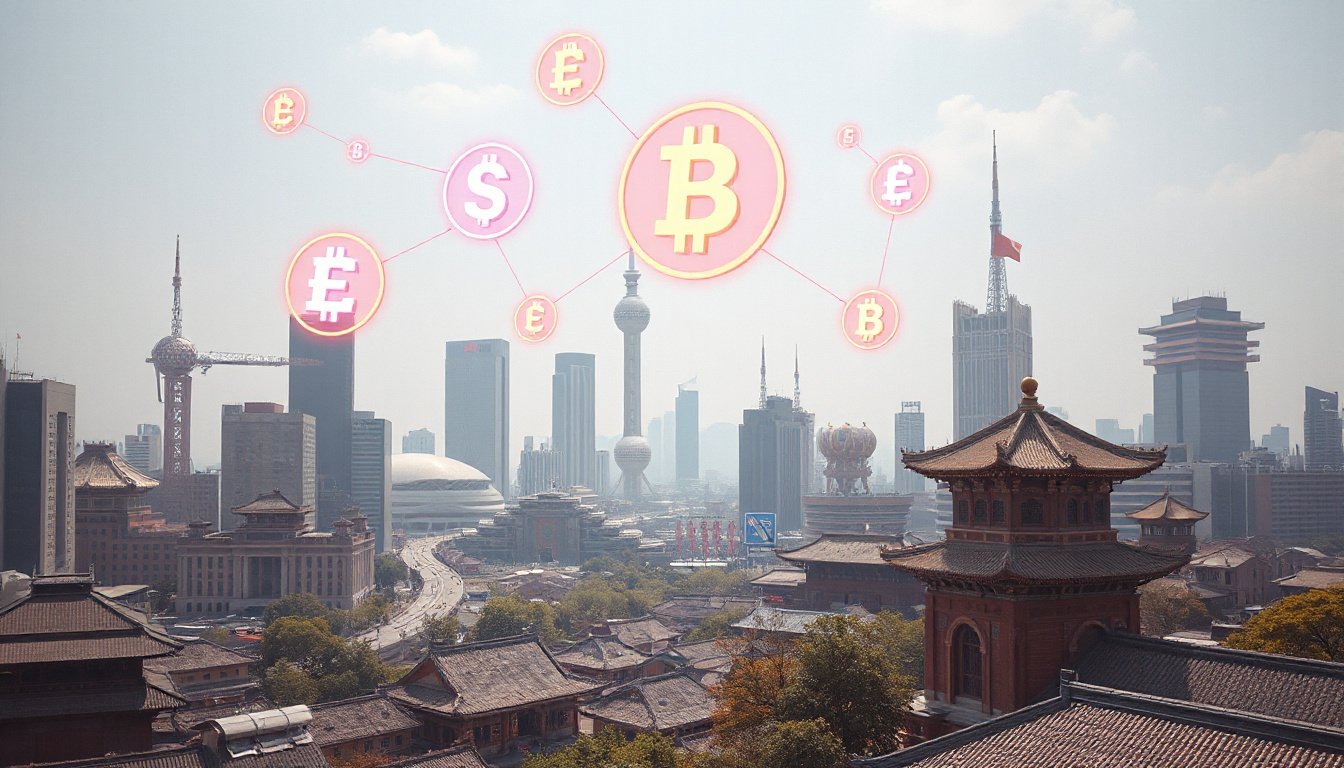
China’s Crackdown on RMB Stablecoins Shows a Split in Regulation on Asset Tokenization
On February 6, 2026, major Chinese regulators – the People’s Bank of China (PBOC) and the China Securities Regulatory Commission (CSRC) – issued a joint statement. They set the law for turning real-world assets into tokens and for creating stablecoins that follow the RMB in China. Their answer was plain: these actions break the law inside China unless written approval comes from the regulators. Token work outside China is allowed when local rules give permission.
Why the Crackdown?
The regulators gave three main reasons for the ban on RMB stablecoins in China.
• One reason is the risk from weak customer checks and low guard measures against money crimes. Stablecoins that match the RMB move fast across borders. This speed may hide risks from the state and its banks.
• A second reason is the free movement of stablecoins. Their borderless nature does not match China’s strict limits on capital flows. Fast, unmonitored transfers can make it hard for the government to track money in the country.
• A final reason is that stablecoins from unapproved firms endanger China’s hold on its money system. The state keeps a strong grip on who prints and moves money here.
Offshore Tokenization: Not an Absolute Ban
Even though China bans these tokens inside its borders, similar work outside the country is allowed if local laws are met. This approach keeps strict rules at home while letting work abroad follow another set of rules.
Hong Kong is a key case in this area. The city built a set of rules for stablecoins and may start giving licenses by March 2026. Its rules require a constant check on each stablecoin owner. This step fits with strict checks for customer identity and measures against money crimes. The rule may change as the regulator reviews its work over time.
Implications for DeFi and Real Estate Tokenization
China’s view shows the challenge of mixing digital tokens of money and real assets into standard banking and investment work. Token work changes real assets into fractions. This change helps split property, goods, or funds into many parts and makes trade a bit faster.
By stopping unsanctioned stablecoins at home, Chinese leaders try to block crypto work that might weaken banks and strict controls. At the same time, allowing approved work abroad shows a measured support for digital tokens under tight rules.
This split affects global markets in decentralized finance. Investors and firms that work with tokens for real estate and similar assets must fit their plans within these rules. Places like Hong Kong, with clear paths and strict checks, may grow into centers that mix old banking methods with new digital work.
The Road Ahead
China’s rule fits a global trend where governments balance new tech tools against bank and money safety. Some nations welcome crypto and token work, while others set firm limits to stop risks.
For those who plan to work with real estate tokens and RMB stablecoins backed by assets, knowing these rules is a key step. China shows that digital tokens will only grow when tech and strong control work as one.
As Hong Kong moves to lead in regulated RMB stablecoins, the world will watch how these changes affect cross-border money moves and the future of digitized real assets.
In summary:
Mainland China bans unapproved RMB stablecoins and asset token work because of risks in money crimes, weak customer checks, and threats to state control. Yet, token work abroad with proper approval – as seen in Hong Kong – remains possible. This split is shaping how token work for real estate and similar assets grows at home and abroad.
—
📝 About This Article
This article was generated by Hivebox AI in collaboration with nGRND.
—
⚠️ Disclaimer
This content is for informational purposes only and does not constitute financial or investment advice.
Please consult with a qualified financial advisor before making any decisions related to investments, markets, or assets.
—
Note on Accuracy & Liability
While we strive to provide accurate and up-to-date information, neither Hivebox AI nor nGRND guarantees completeness, reliability, or suitability.
Use this content at your own risk. Neither party assumes liability for any losses you may incur.
—
Thank you for reading.