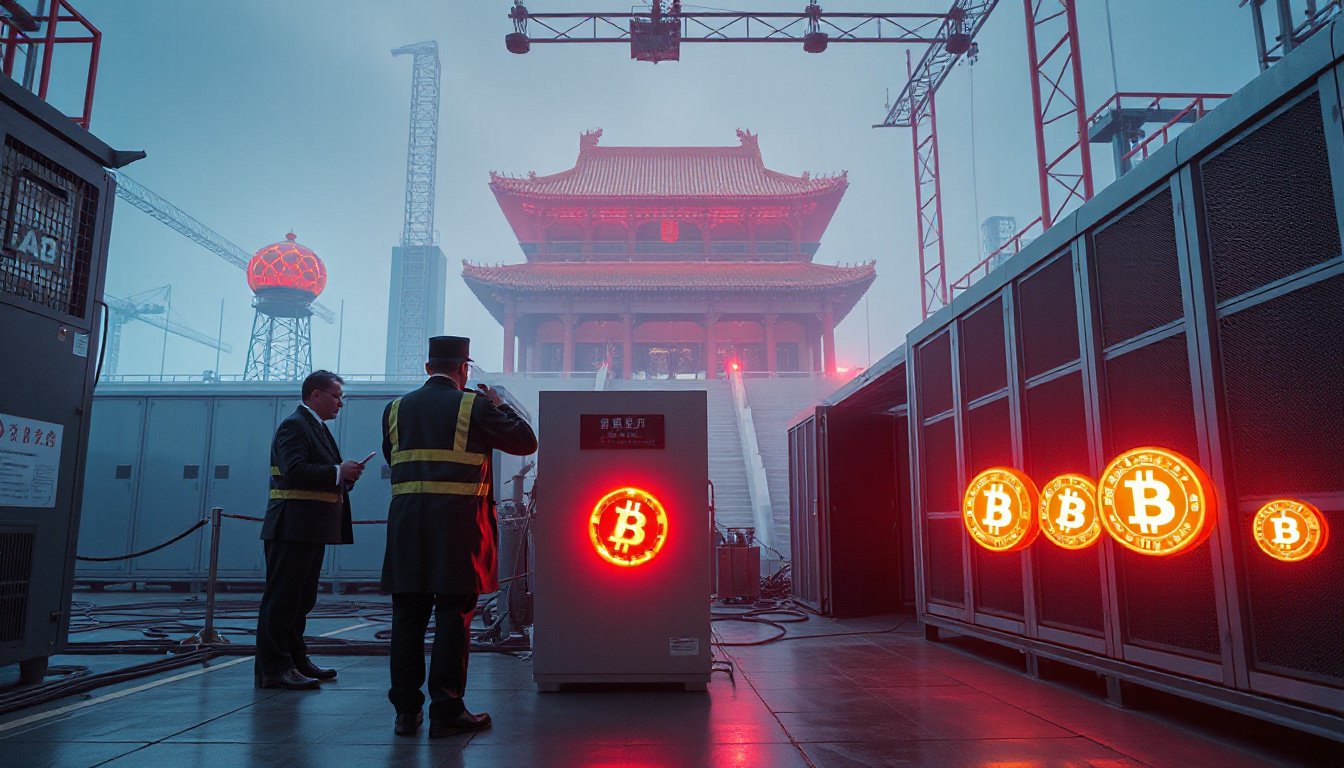
China Intensifies Cryptocurrency Crackdown: Real-World Asset Tokens, Stablecoins, Mining, and Trading Under Strict Regulation
China acts now. Its central bank, the People’s Bank of China (PBoC), and other regulators tighten rules on digital assets. They target tokens tied to real-world assets, stablecoins, mining sites, and trading sites.
Reinforcing the Legal Stance Against Crypto
Chinese leaders issue a joint order. They state that Bitcoin, Ether, and stablecoins are not legal money. The state does not allow these tokens for payment or trade. All crypto work is illegal unless the government gives a permit. Both local companies and those from abroad must stop these services without state permission.
Banks and payment firms get clear orders. They must not open accounts for crypto, settle crypto trades, or hold crypto tokens. They must also avoid linking insurance or credit to any digital asset.
Crackdown on Stablecoins and RWA Tokenization
Tokens pegged to the renminbi face strict limits. The state does not allow these tokens to move or be given out without state approval. Officials see these tokens as a risk because they work like cash. Also, tokens that show a share in physical or financial goods, such as property or commodities, are banned unless approved. The state watches tokens that mix qualities of money and securities.
Mining and Cross-Border Activities Face Heightened Scrutiny
China maintains its strict line on crypto mining. Local officials must close mining plants and block new ones. They must also stop companies from selling mining gear inside China. These steps build on past efforts to cut the high energy use of crypto mining.
The state now checks work that goes past its borders. Regulators look at groups and people tied to China to stop unsanctioned token work abroad. Different agencies join to catch illegal crypto work quickly. They also track crimes such as fraud, fund raising, and money laundering. The state pushes deeper inquiries and fixes risks when clues appear.
Implications for the Digital Asset Landscape
China’s moves bring tougher rules. These rules slow down projects for decentralized finance and token work. The focus on tokens linked to real items shows that the state stays cautious. Some tokens mix real items with blockchain data, and that mix worries regulators. The state’s strict steps may push some work overseas. They may also push builders to find new ways that meet state rules.
The Future of Tokenization and Blockchain Innovation
China stands firm on digital money rules. The use of tokens and stablecoins can bring gains such as more liquidity, fractional trades, and simpler exchanges. Yet the state sets high goals to cut risk, protect buyers, and keep control of money. With bans on unapproved crypto work, other markets will watch how digital asset work changes. The news matters to those who build digital money systems.
Isabella Flores reports on blockchain use and digital tokens. She covers how state rules affect global crypto work.
—
📝 About This Article
This article was generated by Hivebox AI in collaboration with nGRND.
—
⚠️ Disclaimer
This content is for informational purposes only and does not constitute financial or investment advice.
Please consult with a qualified financial advisor before making any decisions related to investments, markets, or assets.
—
Note on Accuracy & Liability
While we strive to provide accurate and up-to-date information, neither Hivebox AI nor nGRND guarantees completeness, reliability, or suitability.
Use this content at your own risk. Neither party assumes liability for any losses you may incur.
—
Thank you for reading.