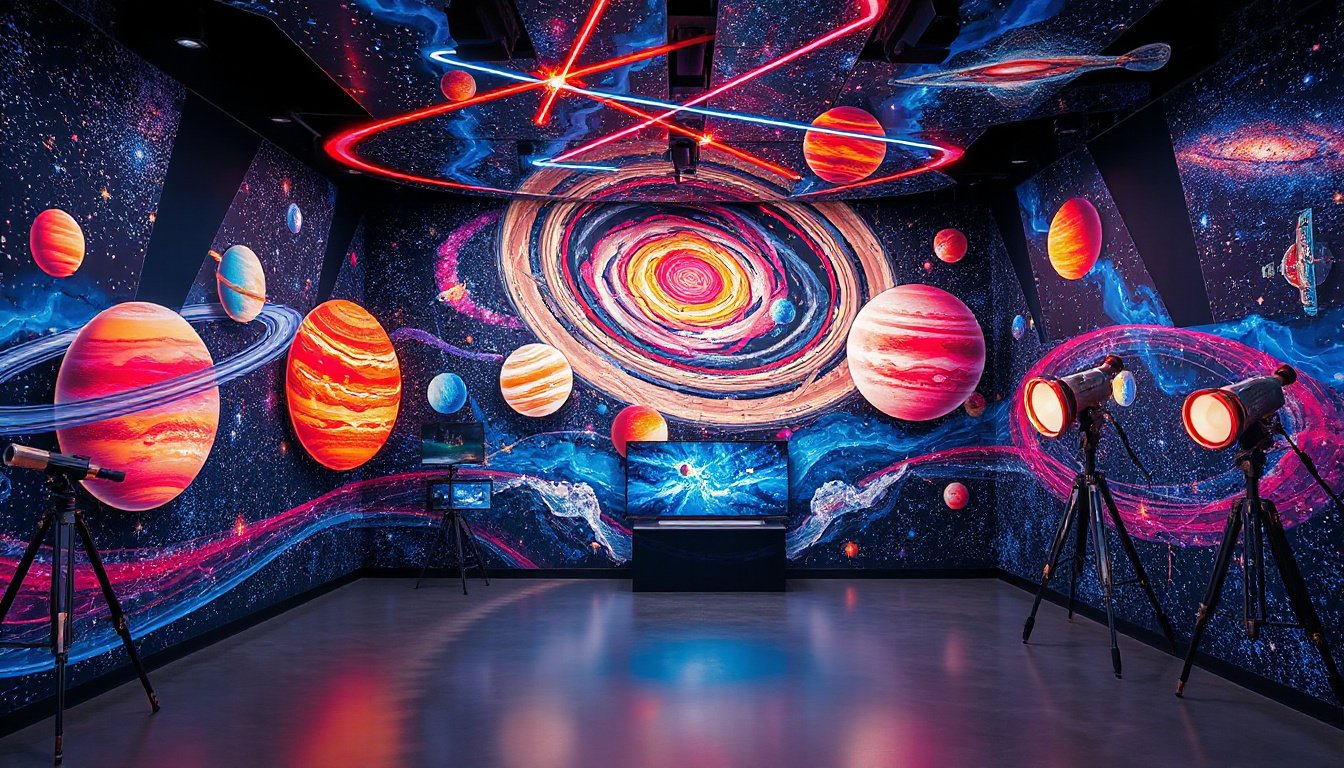
The Royal Astronomical Society (RAS) has joined with the Royal West of England Academy (RWA) to launch a fresh exhibition called Cosmos: The Art of Observing Space. The show opens on January 24, 2026, and runs until April 19, 2026, at the RWA in Bristol. It pairs historic science artifacts with modern artworks in a blend that connects past and present views on space. This mix reflects humanity’s long search to learn about the cosmos.
Curated by visual artist Ione Parkin RWA, the exhibit features work by more than 30 contemporary artists. These artists draw on ideas from astronomy, cosmology, astrophysics, planetary science, space travel, solar change, and the motions of stars. The pieces come in several forms, including painting, sculpture, installations, and digital media. Well-known figures such as Yinka Shonibare CBE RA, Sir Christopher Le Brun PPRA Hon. RWA, Cornelia Parker CBE OBE RA, and Wolfgang Tillmans RA appear alongside newer voices, each sharing a view on the unknown.
The modern works sit alongside rare historical items from the RAS and other national collections. Visitors find old lunar sketches, detailed star maps, and crafted globes that span centuries of sky observation. Each item creates a link to our shared history in space study.
On February 28, 2026, the RAS hosts the Cosmos: The Art of Observing Space Art and Science Symposium at Burlington House, London. Experts—astronomers, archivists, and some of the exhibiting artists—speak at this event, which joins science with art in one forum. The session aims to give a deeper view of how both science and art help shape our understanding of the skies.
This exhibition and symposium come at a time when joining art with science gains more value. Old records meet new art, bridging the gap between what came before and what is new. The link between the RAS and RWA brings together respect for tradition with modern thought on space.
Tickets and more details are on the Royal Astronomical Society website. The work by RAS and RWA points to a forward look at astronomy’s rich past while embracing current ideas in art.
This project fits a trend where old items and creative art meet on digital screens and in galleries. Scientific tools, historic letters, and artworks now find new life. Similar shifts occur in fields like finance and property, where the past joins with modern methods to reach a wider public.
—
📝 About This Article
This article was generated by Hivebox AI in collaboration with nGRND.
—
⚠️ Disclaimer
This content is for informational purposes only and does not constitute financial or investment advice.
Please consult with a qualified financial advisor before making any decisions related to investments, markets, or assets.
—
Note on Accuracy & Liability
While we strive to provide accurate and up-to-date information, neither Hivebox AI nor nGRND guarantees completeness, reliability, or suitability.
Use this content at your own risk. Neither party assumes liability for any losses you may incur.
—
Thank you for reading.