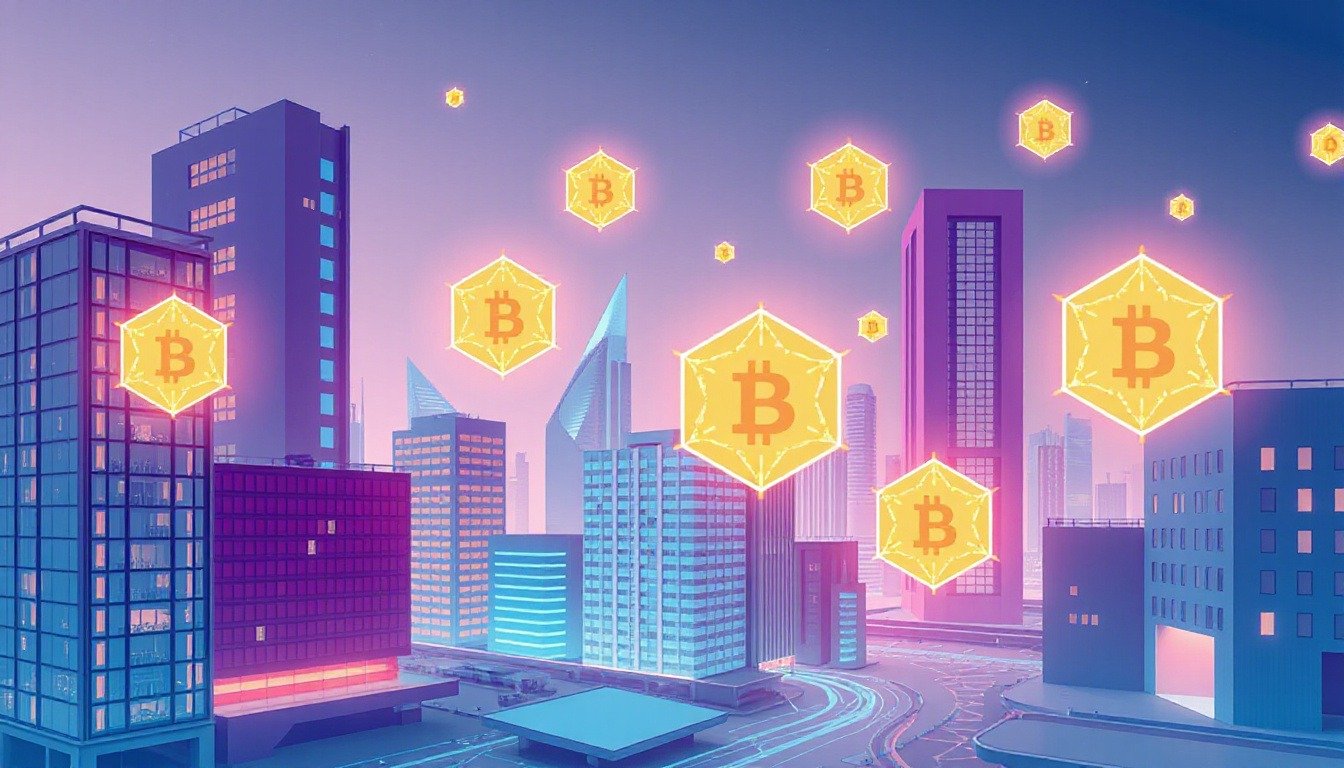
Overseas Real Estate Tokenization Gains Attention Amid Skepticism: A Look Into Second Residence’s Ambitious Model
By National Business Daily Reporter | Published October 27, 2025
The financial world talks of tokenization as it changes real assets. Real estate turns into digital tokens on a blockchain. This process cuts the gap between asset and investor. It aims to open new money paths and share parts of properties. Yet, people warn when the model spreads in markets like overseas real estate tokenization pushed by some Chinese firms.
The Promise: Turn 100,000 Yuan into a Billion with Tokenized Overseas Properties?
Shenzhen-based Second Residence Online Information Technology Co., Ltd. now pushes a model for overseas real estate tokenization. The firm uses social media and WeChat mini-programs to invite buyers. Investors can buy digital “rights” with tokens that tie to physical real estate. They say a 3,000-yuan investment makes one a “junior partner” and 100,000 yuan a “co-founder partner.” They claim one could earn so much that one becomes a “billionaire” from city-wide property rights and high commissions.
The company builds its model with a multi-level partner scheme. The scheme gives a 1,500-yuan reward for each referral and pays up to 45% commission from those who join later. People from many fields, such as investment heads, property supervisors, and ex-bank credit officers, join the scheme.
What Is Real-World Asset (RWA) Tokenization?
Second Residence works to break idle real estate into parts with digital shares on a blockchain network. In simple terms, buyers get a share of a property that was once slow to trade. The firm claims it will lift China’s unused assets into a high-value digital form. It issues tokens to attract buyers from abroad and push money into local projects.
The Marketing Machine: Tokens, Partnerships, and High Returns
The firm describes a clear partner system:
• Junior Partners: An input of 3,000 yuan starts the role.
• Senior Partners: An input of 30,000 yuan starts the role.
• Co-Founder Partners: An input of 100,000 yuan starts the role.
Junior partners are given 10 free tokens. These tokens currently claim a value of 500 yuan after they list. They earn a 30% share when they bring in friends. Bigger investments give rights to manage areas and get bigger parts of earnings from later buyers.
Founder Fan Jia says tokens may list on stock exchanges in Hong Kong or Singapore once the digital assets grow. This step would bring some income to the partners. He also admits that China does not allow token trading for now. Thus, tokens serve as rewards rather than trade items in China.
A Closer Look: Legality, Transparency, and Verification Challenges
A closer search finds problems with the firm’s registered addresses. The Shenzhen office points to a building firm that does not mention Second Residence. One branch office appears empty and shows signs of normal building work. At the same time, the founder meets investors face-to-face and explains the plan behind “share-izing” and tokenizing real estate.
The firm uses a Blockchain Service Network (BSN) on-chain document to show they follow rules. BSN, set up by big Chinese groups like China Mobile and China UnionPay, gives blockchain help. It stops short of checking if assets follow the law or if token rules are met. BSN tells that while it supports on-chain digital work, token issues face limits in China and must follow rules.
Doubts About the “Underlying Assets”
The firm’s mini-program shows projects from known firms like Vanke and Greentown as the source for tokens. Yet, some project owners say they did not agree to work with Second Residence. This gap makes people doubt if tokens tie to real property.
Experts ask that real estate parts must be clear, legally backed, and openly kept. Without these fixes, tokens may turn out to be items with no real support. Such a gap is a strong warning for buyers.
Is It Sustainable or Just “Using a Toothpick to Move the Earth”?
Some junior partners call tokenization a new way to invest. They compare the model to “moving the Earth with a toothpick.” Others ask if the plan will last or if it hides risks. The strong focus on getting new buyers, many reward points, and large return claims look like a system that asks for continuous new money.
Rules are still not fully defined. Chinese civil law allows shared property, but the practical steps to permit digital split rights for a property are hard and carry cost, as the founder explains.
The Broader Picture: Real Estate Digitization and DeFi
Around the world, turning real estate into digital shares on decentralized finance sites works to open property to more buyers, push money in fast, and clear the record. In working cases, law, detailed checks of assets, rule-following token sales, and clear markets make the plan work.
The Second Residence case shows the risk when this plan starts too soon or without enough checks. Buyers must check if the plan is true, confirm real support for tokens, and check if rules are followed.
In Summary
Second Residence’s model to digitize overseas real estate and give high returns mixes fresh ideas with many risks. The idea matches the growing shift to digital property, but early steps show many problems in checks, rule-following, and long-term work. As the field changes, mixing fresh ideas with clear checks and firm rules is key to giving real benefits to buyers and changing how real estate gets traded with blockchain.
—
📝 About This Article
This article was generated by Hivebox AI in collaboration with AuCan Gold.
—
⚠️ Disclaimer
This content is for informational purposes only and does not constitute financial or investment advice.
Please consult with a qualified financial advisor before making any decisions related to investments, markets, or assets.
—
Note on Accuracy & Liability
While we strive to provide accurate and up-to-date information, neither Hivebox AI nor AuCan Gold guarantees completeness, reliability, or suitability.
Use this content at your own risk. Neither party assumes liability for any losses you may incur.
—
Thank you for reading.