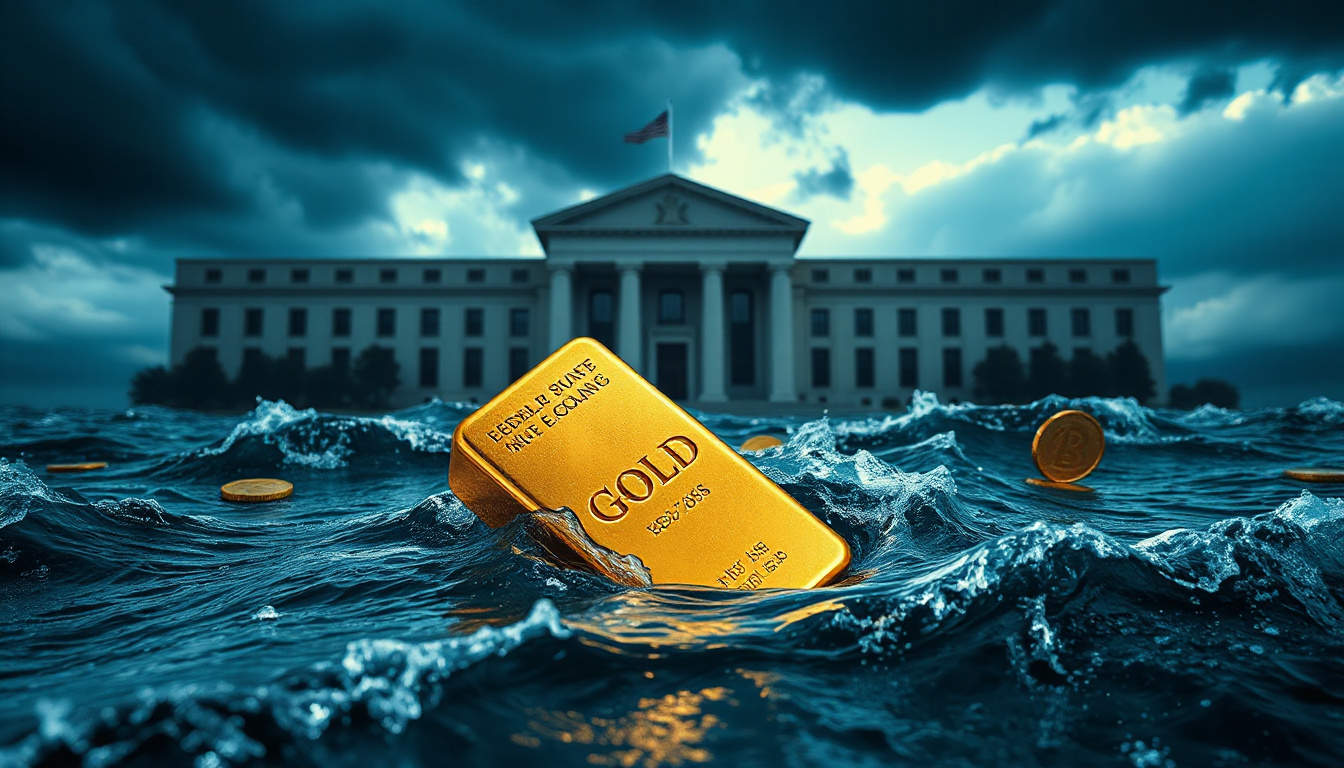
Gold Pulls Back as Inflation Pressure Reprices the Fed Path
Gold prices retreated this week amid rising inflation data that led markets to reassess the Federal Reserve’s monetary policy outlook. Spot gold fell about $103, or 2.4%, closing near $4,227 per ounce by Friday morning, down from $4,330 the previous week. The combination of persistently strong inflation, moderated geopolitical tensions, and the upcoming Federal Reserve meeting has contributed to a complex trading environment for precious metals.
Inflation Data and Federal Reserve Policy Impact Gold
The key driver for gold’s pullback was the May Consumer Price Index (CPI) report showing annual inflation at 4.2%, the highest year-over-year rate since 2023. Energy prices heavily influenced the inflation spike, creating uncertainty about the future path of U.S. interest rates. This maintained pressure on gold as market participants became less confident about imminent rate cuts by the Fed.
While inflation generally supports gold’s long-term appeal as an inflation hedge, the short-term effect can be negative if higher inflation causes expectations of a more hawkish Fed and higher real interest rates. Higher real rates increase the opportunity cost of holding non-yielding gold bullion, leading to price declines.
Geopolitical Developments Weigh on Safe-Haven Demand
The geopolitical backdrop influenced gold dynamics indirectly. Early in the week, optimism over a U.S.-Iran ceasefire and the cancellation of planned military strikes helped ease crude oil prices and Treasury yields. While this lowered some inflationary pressures, it also diminished gold’s safe-haven appeal.
A calmer Middle East reduced the geopolitical risk premium embedded in gold prices, offsetting some inflation-driven support. Thus, gold struggled to maintain gains despite some easing in yields and the U.S. dollar, reflecting the complex interplay between safer geopolitical conditions and inflation-driven monetary policy concerns.
Silver Shows Relative Strength
In contrast to gold’s softness, silver proved more resilient, trading near $68.72 per ounce by Friday—a modest gain of around $0.90 for the week. Silver continues to benefit from a mix of investment demand as a monetary metal and firmer industrial outlooks, differentiating its price movement from gold.
The U.S. dollar’s slight weakening late in the week also helped precious metals, providing some short-term relief. Yet, overall market sentiment was dominated by the revised interest rate expectations rather than by currency movements.
Upcoming Fed Meeting in Focus
Markets are closely watching the Federal Open Market Committee (FOMC) meeting scheduled for next Wednesday, which will be the first under Fed Chair Kevin Warsh’s leadership. Investors anticipate a status quo interest rate stance accompanied by cautious communication regarding inflation risks and labor market resilience. The tone of this meeting will be critical in setting the medium-term trajectory for gold and other precious metals.
Key Details
- Spot gold declined ~2.4% over the past week, trading near $4,227/oz as of Friday morning.
- May U.S. CPI inflation was 4.2% year-over-year, the highest since 2023 and influencing Fed rate expectations.
- Geopolitical developments including U.S.-Iran ceasefire news reduced safe-haven demand for gold.
- Silver held up better, rising modestly to about $68.72/oz amid mixed investment and industrial support.
- The upcoming June 14 FOMC meeting is expected to maintain rates with cautious commentary on inflation.
- Treasury yields and crude oil prices eased late in the week, affecting gold’s inflation and risk premium dynamics.
Why It Matters
Gold’s price movements reflect the delicate balance between inflation pressures, U.S. monetary policy outlook, geopolitical risk, and currency fluctuations. Persistent inflation tends to support gold’s role as a store of value but can suppress prices when it prompts expectations of tighter monetary policy and higher real interest rates.
Geopolitical risk factors, especially involving oil supply routes like the Strait of Hormuz, influence commodity prices and inflation expectations, indirectly impacting gold. Changes in safe-haven demand related to geopolitical stability can either add to or subtract from gold bullion’s appeal.
Additionally, upcoming central bank decisions, such as the Fed’s June meeting, are pivotal in setting expectations on interest rates and inflation tolerance—key drivers behind gold market trends.
Conclusion
Gold faced downward pressure this week due to rising inflation data that tempered hopes for Federal Reserve rate cuts, combined with easing geopolitical tensions that reduced the safe-haven premium. Silver bucked the trend with gains driven by investment and industrial factors. Looking ahead, the Fed’s policy signals will be crucial for gold market direction, amid ongoing inflation and geopolitical developments. Investors and traders should monitor these intersecting influences as they shape precious metals and broader commodities markets.
—
📝 About This Article
This article was generated by Hivebox AI in collaboration with nGRND.
—
⚠️ Disclaimer
This content is for informational purposes only and does not constitute financial or investment advice.
Please consult with a qualified financial advisor before making any decisions related to investments, markets, or assets.