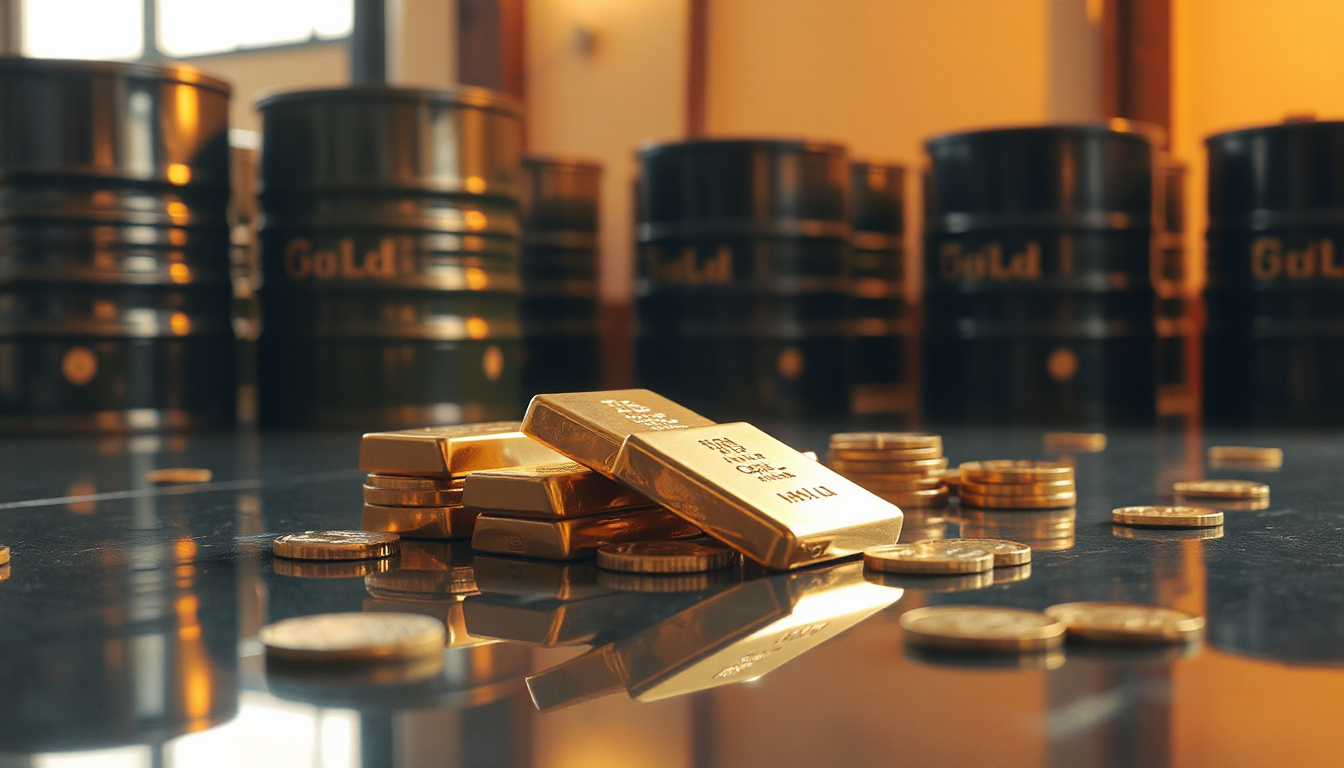
Precious Metals Steady as Oil-Driven Inflation Fears Ease
Precious metals, led by gold, have stabilized after recent volatility, as falling energy prices ease inflation worries and reduce the likelihood of aggressive Federal Reserve interest rate hikes. Despite a significant correction from early 2024 highs, gold’s long-term uptrend remains intact with continued central bank support. Silver and platinum have tracked gold’s path with added volatility.
Gold Price Stabilization Amid Inflation Relief
Gold prices steadied above USD 4,300 following last week’s sharp sell-off that briefly pushed prices near USD 4,000. This rebound aligns with extended declines in crude oil and refined fuel prices, which have reduced fears of a further inflation spike driven by higher energy costs. Easing inflation concerns have lowered expectations for more aggressive monetary tightening from central banks, particularly the U.S. Federal Reserve.
At the same time, U.S. Treasury yields and the dollar have softened, although the two-year Treasury yield remains above 4%, indicating markets have not fully ruled out higher interest rates. Investors await Federal Reserve Chair comments for guidance on inflation and monetary policy.
Central Banks Maintain Strong Gold Demand
The World Gold Council’s 2026 Central Bank Gold Reserves survey highlights sustained gold accumulation by global central banks. Around 89% of respondents expect an increase in gold holdings over the next year with 45% forecasting their institution will add to reserves. Central banks value gold for diversification, inflation hedging, and geopolitical risk management.
The survey also expects a decline in the share of U.S. dollar holdings in global reserves over five years, with gold’s share rising. Emerging market and developing economy (EMDE) central banks continue leading gold reserve buildups, underscoring structural demand for the precious metal.
Technical Outlook and Market Trends
Technically, gold has retraced about 38.2% of its rally from 2022 lows to the January 2024 peak, a mild correction within a strong upward trend. The key resistance to watch is the 200-day moving average near USD 4,458, which gold must surpass to signal a sustained recovery.
Silver and platinum have mirrored gold’s trend but with higher volatility due to lower market liquidity. Silver faces demand risks from elevated prices, exemplified by a sharp 87% year-on-year drop in Indian silver imports in May, linked to price-driven restrictions and dampened demand. Despite this, silver’s long-term outlook remains supported by supply deficits and increased industrial demand related to energy transition.
Platinum has experienced even greater volatility, influenced by weaker liquidity and concerns over global economic growth and industrial demand.
Key Details
- Gold steadied above USD 4,300 after a sharp sell-off near USD 4,000.
- Falling oil and fuel prices have eased inflation fears, reducing pressure for Fed rate hikes.
- U.S. Treasury two-year yields remain above 4%, signaling continued rate hike risk.
- The World Gold Council survey shows 89% of central banks expect to increase gold reserves.
- Gold price correction retraced 38.2% of its 2022-2024 rally, maintaining underlying strength.
- Silver imports to India plummeted 87% in May amid high prices and import restrictions.
- Platinum’s volatility increased with concerns about economic growth and industrial demand.
Why It Matters
Gold price movements closely reflect inflation expectations, interest rate outlooks, and central bank demand. The recent easing of oil-driven inflation fears reduces the urgency for aggressive rate hikes, which typically weigh on precious metals. Central banks’ strategic accumulation underscores gold’s enduring role as a reserve asset that diversifies risk amid geopolitical and economic uncertainties.
Silver and platinum face additional demand challenges due to price sensitivity and industrial usage, linking their market dynamics to broader economic and energy transition trends. Monitoring these factors is crucial for understanding the trajectory of the precious metals sector and its links to commodities and macroeconomic policy.
Conclusion
While gold and other precious metals experienced a notable correction in early 2024, the sector is stabilizing as inflation concerns diminish alongside falling energy prices. Central bank demand continues to provide a structural foundation for gold’s long-term upward trend despite short-term volatility. Silver and platinum remain more volatile but retain their fundamental support from supply constraints and industrial demand shifts. Investors and market watchers should focus on central bank policies, inflation developments, and technical levels to gauge future gold market direction.
For continuing gold news and insights on precious metals and commodities, stay tuned to market updates and expert analysis.
—
📝 About This Article
This article was generated by Hivebox AI in collaboration with nGRND.
—
⚠️ Disclaimer
This content is for informational purposes only and does not constitute financial or investment advice.
Please consult with a qualified financial advisor before making any decisions related to investments, markets, or assets.