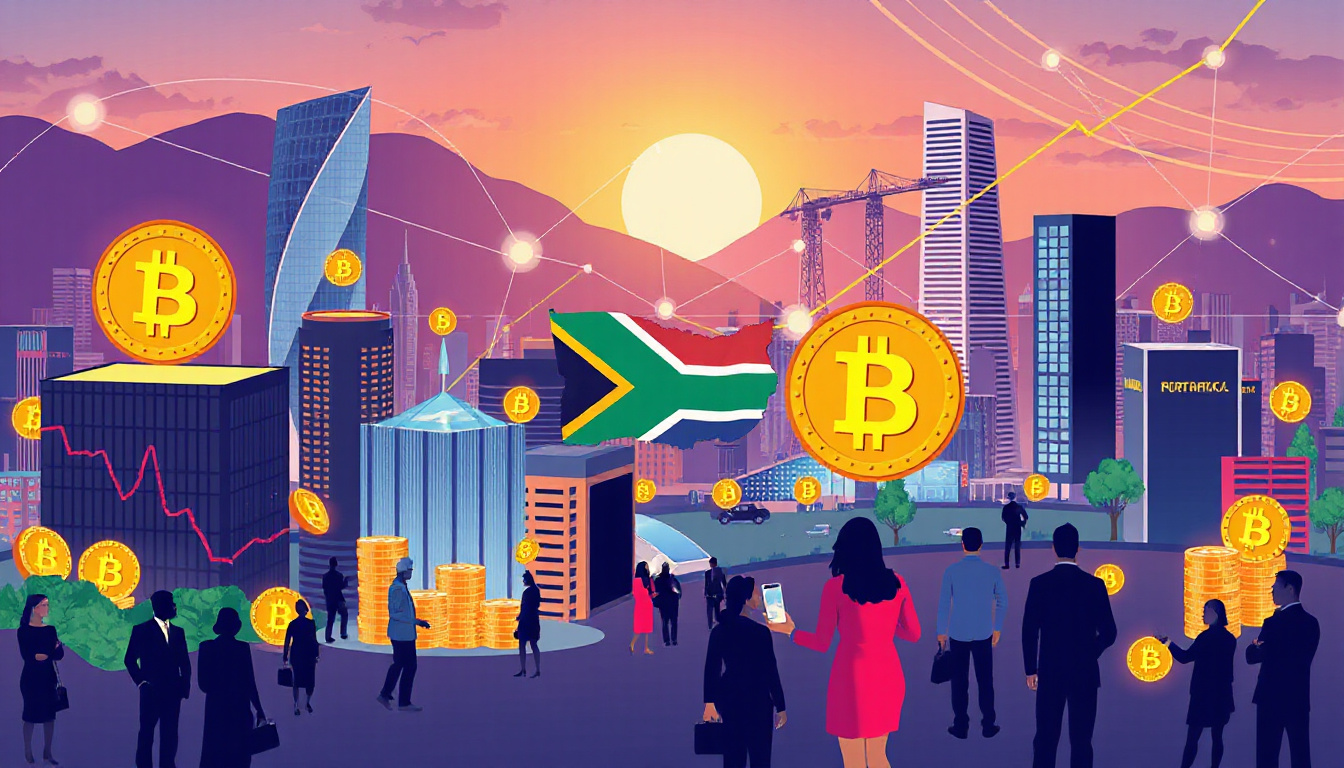
Tokenised Assets Gain Momentum in South Africa
South Africa is witnessing growing interest and adoption of tokenised real-world assets (RWA), as institutions and investors explore blockchain technology for asset tokenization. This development could transform local financial markets by improving accessibility, liquidity, and efficiency in asset trading and investment.
Growing Institutional Engagement with Tokenisation
A significant indicator of this momentum is the upcoming Luno Institutional Digital Assets Conference scheduled for 11 June 2026 in Cape Town. It will bring together industry leaders, regulators, and economic experts to discuss the opportunities and implications of tokenising assets such as government bonds, properties, private equity stakes, and money market funds. Participants include executives from Luno and Sanlam, government officials, and economists.
How Tokenisation is Changing Asset Markets in South Africa
Tokenisation refers to converting ownership rights of real assets into digital tokens on a blockchain. This innovation enables assets traditionally characterized by illiquidity, high trading costs, and minimum investment thresholds to be fractionalised, traded instantly, and held securely in digital wallets. For example, tokenised government bonds can settle in seconds and be used as collateral in real time, while private credit can become tradeable in smaller denominations via digital rails.
Luno’s Role in Expanding Tokenised Asset Access
Luno, a leading digital asset platform, has introduced over 60 tokenised US stocks and exchange-traded funds (ETFs) to South African investors since August 2025, attracting more than 50,000 users. Beyond stocks, Luno’s offerings signal a broader shift towards incorporating tokenised securities into everyday investment portfolios.
The Importance of Stablecoins in Tokenised Asset Settlements
Digital cash is essential for settling tokenised asset transactions efficiently. In South Africa, the rand-backed stablecoin ZARU—launched by a consortium including Sanlam, Luno, EasyEquities, and Lesaka—provides a digital fiat solution supporting transactions on blockchain networks. The synergy between stablecoins and tokenisation is critical for creating robust DeFi infrastructure within traditional finance.
Why It Matters
The adoption of tokenisation in South Africa signifies a meaningful step towards integrating Real World Assets into the digital finance ecosystem. It promises to democratize access to investments that were once exclusive, reduce settlement times, and enhance transparency. The development aligns with global trends where major institutions are tokenising assets and regulators are recognizing the potential systemic implications. This evolution can strengthen the local financial market infrastructure and encourage regulatory frameworks supportive of digital asset innovation.
Key Details
- South Africa’s institutions actively exploring tokenisation benefits such as improved liquidity and accessibility.
- Luno Institutional Digital Assets Conference on 11 June 2026 in Cape Town to discuss tokenisation’s future.
- Over 60 tokenised US stocks and ETFs available to over 50,000 South African investors via Luno since August 2025.
- Tokenised real assets include government bonds, properties, private equity, and money market funds.
- ZARU stablecoin enables efficient on-chain settlement of tokenised assets using rand-backed digital cash.
- The global RWA tokenisation market hit $33.91 billion in 2025 with substantial projected growth.
- IMF views tokenisation as a fundamental reconfiguration of financial architecture.
What to Watch Next
- Outcomes and insights from the Luno Institutional Digital Assets Conference and its influence on institutional adoption.
- Expansion of local tokenisation infrastructure and integration with blockchain-based DeFi platforms.
- Regulatory responses and frameworks emerging from South African authorities to support or govern tokenised assets.
- Growth in the issuance and trading of tokenised assets beyond stocks, including bonds and private credit.
- Development and adoption rates of the ZARU stablecoin in everyday digital asset transactions.
Conclusion
South Africa is progressing towards a more digitised financial ecosystem where Real World Assets are increasingly represented as tokenised digital assets within DeFi environments. This shift, supported by institutional interest and innovations like stablecoins, has the potential to enhance market access, liquidity, and operational efficiency. Continued dialogue among industry players and regulators will shape the trajectory of tokenisation’s role in South Africa’s evolving investment landscape.
—
📝 About This Article
This article was generated by Hivebox AI in collaboration with nGRND.
—
⚠️ Disclaimer
Disclaimer: This content is for informational purposes only and is not financial or investment advice. Always do your own research or consult a qualified professional before making investment decisions.