U.S. Treasury Bill Funds Lead $29 Billion Real World Assets Market Through Tokenization
Tokenization Pushes Growth in Real World Assets Market
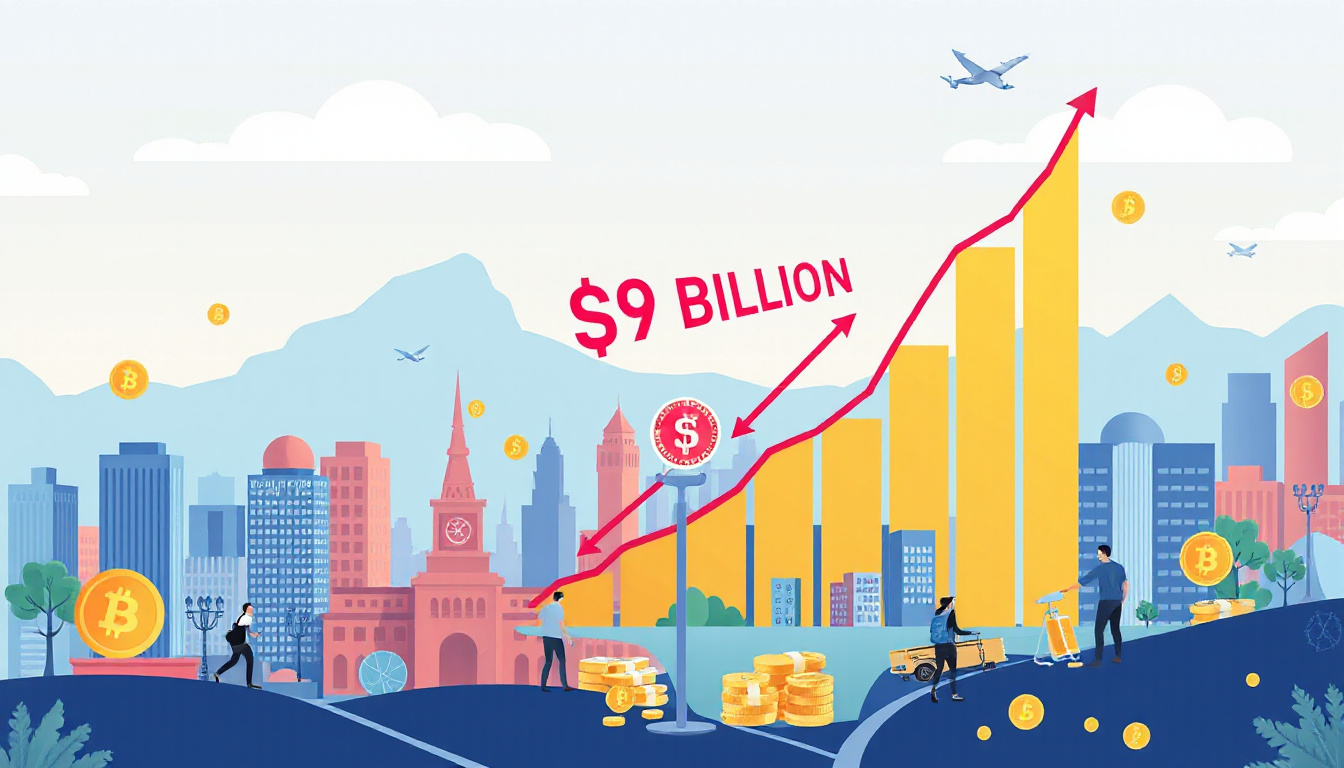
Tokenized real world assets hit a market cap of about $29 billion. This figure shows a 238% increase in one year. Over three years, the market grew 20 times. Tokenization of assets in DeFi spreads fast. Traditional assets such as bonds, commodities, and funds move onto blockchain networks. Blockchain now connects digital records with clear paths for investment.
U.S. Treasury Bill Funds Rule Tokenized Asset Classes
Bonds stay the largest part of asset tokenization as U.S. Treasury bill funds and money market funds add up to over half of the $29 billion. U.S. Treasury bills are short-term government debt and seen as safe. This view helps them gain a top spot among tokenized assets.
Key points:
• The RWA market cap varied from $26.15 billion to $27.77 billion.
• DeFi protocols for RWAs hold $2.38 billion in total value locked.
• Open interest in RWA contracts reached $1.95 billion.
• Precious metals came next with a cap of $5.83 billion.
• Other tokenized assets include private credit, stocks, real estate, reinsurance, equities, indices, and ETFs. Each of these stays below $2.3 billion in cap.
Leaders in Treasury Bill Fund Tokenization
Issuers now compete for the top spot in U.S. Treasury bill funds.
• Circle’s money market fund USYC holds about 18.75% of the $16 billion market. This share nears $3 billion.
• Securitize’s BUIDL comes close with a $2.5 billion cap.
• Centrifuge (CFG) brought $1.5 billion.
• Franklin Templeton and Ondo Finance (ONDO) also match with near $1 billion each.
This race shows issuers push hard for market share in government debt tokens.
Asset Tokenization Beyond Bonds: Multiple Ownership Forms
Tokenized stocks and other equities use different ownership forms.
• Some tokens carry direct proofs of ownership.
• Others hold real stocks off-chain while showing them on-chain.
• Some tokens track prices without giving legal rights.
These forms let investors pick a method that fits control and transparency needs in DeFi.
Institutional and Regulatory Ties in the RWA Market
U.S. Treasury bills and stablecoins work with clear rules. Many features of the market rest on known financial systems and legal paths. Stablecoin rules help bring in investors who trust fiat systems. This framework adds clear checks and smooth trading features for tokens.
Summary
• The tokenized RWA market cap hit $29 billion, a 238% jump in one year.
• U.S. Treasury bill funds lead with $16 billion in active plans.
• Bonds, metals, and more get traded on DeFi platforms.
• Issuers like Circle, Securitize, Centrifuge, Franklin Templeton, and ONDO push the field forward.
• Ownership in stocks runs from direct tokens to off-chain forms.
• Financial rules and stablecoins help link old and new systems.
This shift in asset tokenization builds a bridge between traditional finance and DeFi. Both retail and institutional investors get a path to clear, fast, and secure access to digital assets.
—
📝 About This Article
This article was generated by Hivebox AI in collaboration with nGRND.
—
⚠️ Disclaimer
This content is for informational purposes only and does not constitute financial or investment advice.
Please consult with a qualified financial advisor before making any decisions related to investments, markets, or assets.
—
Note on Accuracy & Liability
While we strive to provide accurate and up-to-date information, neither Hivebox AI nor nGRND guarantees completeness, reliability, or suitability.
Use this content at your own risk. Neither party assumes liability for any losses you may incur.
—
Thank you for reading.